


Centrecom

Working at a Contact Centre? Here Are 4 Things on What NOT to Do

Working at a Contact Centre? Here Are 4 Things on What NOT to Do

Congrats! You’ve scored an interview and are now working at a contact centre! How can you be better? Read more.

Congrats! You’ve scored an interview at a call centre, passed, got the necessary training, and know how to answer calls. Now what? How can you be better? Working at a call centre is no easy feat. It’s a fast-paced environment, with challenging customers but will give you a newfound respect for all customer reps at the other end of the line.


After going around speaking to other employees at our own contact centre, here are some top tips of what NOT to do when you’re starting new on this career path.


1. Do NOT slouch, chew, or play a game while you’re on a call.


The customer cannot see you, but they can surely hear you, and usually, the customer will react to how you make them feel. Proper posture and smiling whilst speaking is one of the factors that will help you sound enthusiastic and willing to help the caller.


Imagine you’re on a call and you hear someone gobbling down on something tasty or slurping while you’re trying to make them understand your issue. Frustrating, isn’t it? Now imagine you could see them playing a game, and gulping quickly while you’re still trying to explain your problem. Not only is it frustrating, but time-wasting, as you would need to explain all over again as they weren’t listening to the first time around.


TIP: Sit properly, answer the call with a smile, and vary your voice pitch to avoid sounding unenthusiastic and monotone.


Working At A Contact Centre Blog Image


2. Do NOT take things personally.


It’s been a long day or you may even just be starting your day and this customer is definitely rinding you up. Worry not. Take a deep breath, remain your professional self, do not retaliate, and help the customer as best as you could. Callers are sometimes angry as they feel that they’ve been through the mill, and now are feeling discouraged that their matter could ever be resolved. Show them you’re actively listening to them, and ask them questions that will help you resolve the issue at hand. This will help to de-escalate the call and might even earn you a compliment from the caller for the great service. Once you’re done, give yourself a pat on the back, and take the next call with a fresh attitude and the shift will be over before you even know it.


3. Do NOT be afraid to ask for help.


Sometimes you may need to rope in someone else or ask for assistance from your superior. In each cop movie I have watched, every cop asks for backup when they’re in a tough situation and really… you’re no different. You’ve scoured through the guidelines and notes but you cannot seem to get to the solution. Ask the caller if they’re O.K. with you putting them on hold for a brief moment while you get assistance, and then go ahead and ask for support. They would definitely rather you ask questions than provide incorrect information.

Knowledge is key and will give you a confidence boost the next time you are able to resolve that same issue by yourself. 😉 


4. Do NOT breach GDPR.


This may be the most important one, but whenever you are handling a call, always ask questions to get a better understanding. The General Data Protection Regulation (GDPR) is fundamental to human rights law and privacy law.

But, how does this relate to working in a call centre?

People trust companies with sensitive information, and you may be the person seeing this information. Simply put, do not assume you are talking to the correct person, but ensure that you ask all necessary questions to verify their identity. Non-compliance with GDPR puts everyone in boiling water (and very heavy fines) and who wants that? When in doubt, feel free to turn to your superiors. You will thank yourself for this later.


If you’ve got this far, applause to you for reading about self-improvement at the workplace: 👏👏👏.

Think we’ve missed something that’s worth a mention? Let us know or join our team.

 

Tell Centrecom what your organisation needs and discover how a tailored outsourcing solution can support service quality, customer care and operational efficiency.

Working at a Contact Centre – A ‘How to’ Guide

Working at a Contact Centre – A ‘How to’ Guide

Looking to start a new career at a contact centre and need some help on how to navigate this new role? Read more…

Regardless of which industry you work in, you’re bound to encounter some bumps in the road. 

Today, we’re going to go through possible scenarios you might come across at a contact centre and how our Team Coordinators handle these rocky situations, and what advice they can offer you!  

So, buckle up and let’s get started! 

Let's Go! Let's Go!


Scenario #1:

Your employees don’t have an ounce of motivation in them and are slacking in their daily work. You try and try to bring back their motivation, but nothing seems to be working so you’re stuck waiting until a spark reignites their energy.


1. How do you keep your team motivated?  


Janice: With the help of a system I use, I set daily personalised targets for each agent and am able to monitor their progress. While I praise and congratulate those who finish their tasks and reach the targets, I also take time to speak to those agents who might not be finishing the tasks. I firmly believe in the importance of one-to-one meetings, as this allows me to understand what the agent is feeling, what they are finding difficult, and how I can help them.


Scenario #2:

Your team was faced with a difficult situation that they were not prepared for, and even though you may or may not like to admit it, you weren’t prepared either. Now, everyone keeps asking you questions you don’t know how to answer and everyone is scrambling around the office trying to figure this out.


2. How do you handle difficult situations and how do you help your team overcome challenges? 


David: My motto is ‘stay positive’, and that’s exactly what I do in the midst of a challenge. I believe that a calm and composed individual is able to come up with solutions quicker, allowing for the issue to be resolved at a faster pace. Moreover, I believe that challenges are learning opportunities for myself and my team. We learn how to come up with fast solutions and how to adapt to unexpected situations while also acquiring new skills. 

My advice for my team is to take a step back, analyse the situation, and use their already acquired skills to start tackling the situation bit by bit! 


Stay Positive - Contact Centre How To


Scenario #3:

Someone made a mistake and I don’t mean someone spilled coffee over their desk. One of your employees made a mistake that requires fixing, but it’s a mistake you can use to teach others. 


3. What’s a mistake you made early on in your career and what did you learn from it? How would you guide employees who might do the same mistake?


Corinne: I started out in 2018 as a call agent and admittedly, I wasn’t one of the best. I did not possess the right soft skills and lacked other skills. However, my Team Leader at the time did not just sit around and let me throw out my career, she took the time to teach me how to deal with customers and how I should approach situations. Due to her taking interest in me, I was able to acquire new skills and I eventually moved up to be a Team Leader and then a Team Coordinator. 


I have learned from my mistakes and now spend my time making sure my team has the material they need to work efficiently. Should an agent be making the same mistake I did or another mistake, I ensure to allocate time to speak with them and show them other ways they could approach the task at hand. I am a firm believer that one-to-one mistakes are beneficial for all parties involved as one can learn and help as needed! 


Feeling stressed at work? Here’s something that might help!


All views shared are based on personal experiences only and may not be used as legal, business, or financial advice.

Tell Centrecom what your organisation needs and discover how a tailored outsourcing solution can support service quality, customer care and operational efficiency.

Don’t Sweat It: How to help employees deal with stress

Don’t Sweat It: How to help employees deal with stress

So, are you ready to see how you can help your employees in managing and reducing their stress?

Let’s face it, stress at the workplace is inevitable, from that one co-worker who won’t stop giving you their work to complete, to that customer who has a problem so big and complex it seems impossible to solve. 

You might be thinking to yourself if stress is inevitable, I should just learn to live with it. Well, that is not ideal as stress can cause problems varying from health-related issues and work-related issues. 

  • Stressed employees are more likely to take up smoking and drinking to cope with the stress 
  • Since they have a lot of work to do, they most probably won’t have time to exercise or prepare home-cooked meals, which will result in them eating unhealthy food and living an unhealthy lifestyle 
  • Stress leads to sickness – weakened immune system, stomach aches, high blood pressure, and headaches – and this will lead to your employees calling in sick more times than you’d like 
  • The work your employees produce while stressed? It most likely won’t be up to company standards as they would have done it in a rush to get it over with 

36% Of Employees Believe That Their Organisation Is Not Doing Anything To Help With Employee Burnout.
Source: Https://Www.eaglehillconsulting.com/Wp-Content/Uploads/Ehc-Covid-19-And-Employee-Burnout-Webinar.pdf

So, are you ready to see how you can help your employees in managing and reducing their stress?

  • Encourage mini-breaks

Employees can’t be expected to sit at their desks all day and not get up. They need time to take their eyes off the screens and stretch, which is why it is important to encourage short breaks throughout the day. They can be anywhere between 5 to 15 minutes, short enough that your employees can do something other than their task at hand, but not long enough that it will disrupt their work life.

  • Provide training 

If your employees don’t undergo the proper training prior to starting a project, they won’t be equipped with the tools needed to produce quality work, or, they won’t know where to start, leading to more stress and chaos.

Here’s what we do at Centrecom: Train our employees prior to the start of the project, provide them with manuals and guidelines they can reference during their day-to-day work life, and offer support and guidance in the form of Team Leaders who are always available to help the team.

  •  Open communication 

If you don’t talk to your team, how will you know when they’re stressed and overworked? It’s important to hold meetings with your employees on a regular basis to give them a chance to discuss any issues they may be having.

Stress comes and goes, what’s important is you know how to help your employees during their stressful periods, and if you’re currently feeling stressed out and looking for something that will help, enjoy this 4-minute video of adorable puppies!

Tell Centrecom what your organisation needs and discover how a tailored outsourcing solution can support service quality, customer care and operational efficiency.

3 Ways To Keep Fit at Your Desk | Global Employee Health and Fitness Month

3 Ways To Keep Fit at Your Desk | Global Employee Health and Fitness Month

Get physical and join the Centrecom team in celebrating Global Employee Health and Fitness Month this May. Read more…

While most people associate the month of May with all things spring related, May is also known as the national month dedicated to physical fitness and sports or better yet as ‘Global Employee Health and Fitness Month’.


The aim of this is to promote physical activity and the benefits that come with sports participation. 


Physical activity is key to maintaining a healthy well-being. Getting active can improve fitness and reduce stress, reduce risk for many chronic diseases, and ease symptoms of anxiety and depression. 


But how can you remain physically fit when you work a desk job? 

Well, apart from exercising before or after work or on weekends, here are some things you can do while at the office that are subtle enough that they will not annoy your co-workers:


  • Walk it

Okay, maybe not the entire way, especially if you live quite far from the office. However, you can park your car a kilometre away and walk it to and from the office. This would add up to you walking two kilometres five days a week, making that ten kilometres in total! 


  • Stretches 

Busy day? Don’t have time to walk around? Then do some of these simple stretches at your desk in between writing emails or answering calls. 


  • Walk some more

While we are on the subject of walking, let us discuss how you can get some steps during office hours.  

You don’t have to stop working just because you’re moving. Walking meetings are a great opportunity to move, enjoy the outdoors. 

As an added benefit, moving together boosts team cohesiveness which also has a positive effect on team building.

Office Ezercise - Jumping Jacks
Office Exercises - Planking
Office Exercises - Sit-ups

We at Centrecom understand the importance of keeping fit while at work, which is why we organised random fitness activities designed to keep our employees fit while also providing fresh fruits for all our staff!

Tell Centrecom what your organisation needs and discover how a tailored outsourcing solution can support service quality, customer care and operational efficiency.

Empowering your front line!

Empowering your front line!

Front-line employees can help optimize the experience of any business organisation, and empowering them will set you on the right track for company growth.

Employees are often the company’s biggest asset especially since they are most often the front-liners of your product and service offering.


Here are some tips on how companies can empower the front-line:


  1. Give Employees a Say: Consult with your employees, especially those at the front-line of your operation. They are the ones who have the best know how of your product/service and their feedback is not only valuable but can also be relatable to your customer’s first-hand experience.

  2. Recognize Great Work: Your front liners, especially those who have been with the company and share a passion for customer satisfaction are more likely to go out of their way to solve complicated customer problems. Make sure these front-liners know that their job is being appreciated.

  3. Invest in Development: Ensure that your front-liners have the support they needed, so whether it is giving them new tools to work it, or additional training programs, they are always well-equipped to handle your operation.


Here are some pros and cons about empowering the front-line:


Pros

  1. Since the empowered employees would be much closer to the customers to ask questions or address problems directly, then the response time should drop and problem solving is improved.
  2.  
  3. When the employees work without constant oversight from their boss or supervisor, the employees feel trusted and respected and this improves productivity and profitability from each employee.

  4. Since the front-line employees would have more responsibilities, managers could focus more on the strategies or project planning rather than staying with the employees and handling the day-to-day decisions at the front-line.


Cons

  1. While assigning responsibilities can improve productivity and speed to action, at times quality can be replaced with quantity resulting in more mistakes.

  2. If a team of employees lack the experience or talent to complete the work, this can expose the company to many risks, such as poor decision making.

  3. Empowerment without structure can be problematic because if no structure is built, and the risk that boundaries may get broken or employee/employer relationships may get suffer is a high probability.


Front-line employees can help optimize the experience of any business organisation. If you are a company needing front-liners to support in managing your operation, or you yourself like to be part of the action and enjoy working in an environment where you are empowered to grow, get in touch: info@centrecom.eu +356 2364 4011 recruitment@centrecom.eu +356 2364 9415

Tell Centrecom what your organisation needs and discover how a tailored outsourcing solution can support service quality, customer care and operational efficiency.

Working after becoming a Mother

Working after becoming a Mother

Once toddlers start gaining independence, some mothers may consider going back to work. This does not only offer financial support but can also prove to be a

Taking the plunge, working after becoming a Mother

Once toddlers start gaining independence, some mothers may consider going back to work. This does not only offer financial support but can also prove to be a good opportunity to regain talents and develop new skills in the workplace.


Let’s face it, giving birth is one of the most overwhelming experiences a woman can face. Leaving hospital with your new baby is only the beginning of numerous sleepless nights, but also a life of enriching moments as you watch your child grow.


As children grow older and are able to stand on their own two feet, it may be the perfect opportunity for you to look into getting back into the workforce.


Life outside the home

Most women within Centrecom claim that their new job allows them to reignite and gain new skills, meet individuals from different walks of life and create new friendships.


Additional income

Have you been considering a special trip for all the family, or looking to treat yourself to some new clothes? Most mothers feel guilty about spending money on their selves, yet with a new part-time job, treating yourself and your family may be easier.


Smarter and more independent children

Children with working mothers turn out to be more independent as they now need to learn to do certain tasks more independently. They also learn to value the role you play at home even more.


Inspiring your children

Having your children see you multi-task can be the biggest inspiration to help them in building an ambitious future and understand that hard work is what is needed to succeed in life.


Centrecom currently has a number of vacant positions for mothers looking for part-time positions, which include Call Centre Agents as well as Back Office administrators. We would like to hear from you, send us a CV to recruitment@centrecom.eu.

info@centrecom.eu (Sales) or recruitment@centrecom.eu (Recruitment)

+356 2364 4011 (Sales) or +356 23649415 (Recruitment)

Tell Centrecom what your organisation needs and discover how a tailored outsourcing solution can support service quality, customer care and operational efficiency.

Recruitment and Interviews – a Challenge for both the Employer and the Candidate?

Recruitment and Interviews – a Challenge for both the Employer and the Candidate?

The Recruitment industry has evolved over the past 20 years, both from an employer’s point of view, as well as from candidates at interview stage. At the back

The Recruitment industry has evolved over the past 20 years, both from an employer’s point of view, as well as from candidates at interview stage. At the back of this change, is the introduction of new technologies, which has not only changed the way companies recruit, but also the way human beings, whether they be employers or interviewees, communicate. We sat down with Natalie, Cynthia and Whitney, our Recruitment gurus here at Centrecom to discuss the challenges that come along with recruitment. Not only have they come up with some good tips to overcome these challenges as employers, but they have also passed on some good advice on how candidates can ace that interview!

What are the three (3) main challenges of recruitment?

Do you have any tricks of the trade that you can share?


What recommendations would you give candidates attending an Interview?


    • Research – Prepare yourself for the interview and get to know the company you are applying with, before the interview;


    • Honesty – Be honest when answering questions related to your professional experience and your qualifications but do not overdo it. Then again, when asked questions about your personal and social life, one should be cautious with the answers; and


    • Listen – sometimes candidates either lack confidence and are anxious, or else they are overzealous asking too many questions – make sure you listen out to what the interviewer has to say, and don’t worry, there will be time to ask questions!


recruitment@centrecom.eu (for vacancies) or info@centrecom.eu (for services), +356 2364 9415 (for our HR team) or +356 2364 4011 (for our Sales & Marketing Team). You can also follow us on Facebook @centrecomcareers and Instagram @insta_centrecom. Visit our Open Day on the 6th July – more info on our Facebook and Instagram pages!


Tell Centrecom what your organisation needs and discover how a tailored outsourcing solution can support service quality, customer care and operational efficiency.

Why Are Employee Retention Strategies Important?

Why Are Employee Retention Strategies Important?

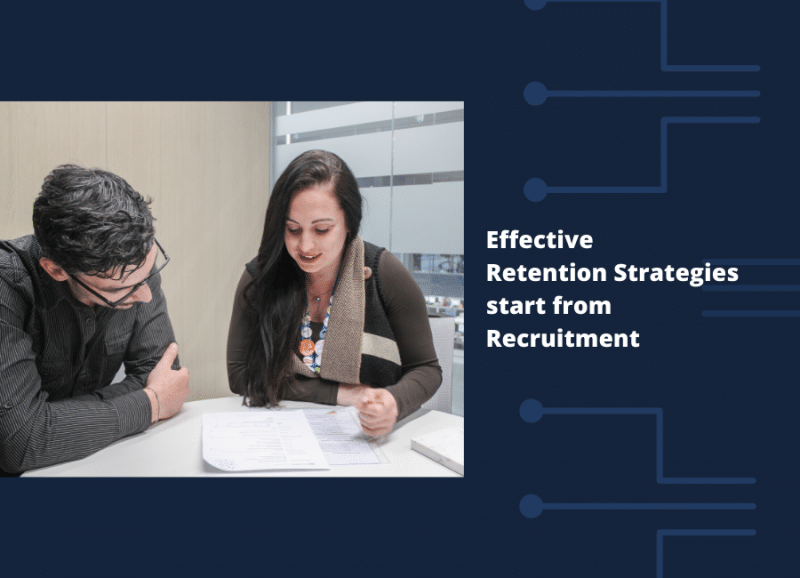
Small businesses typically have limited resources and retaining quality talent is crucial to business success. Effective employee retention strategies can,

Small businesses typically have limited resources and retaining quality talent is crucial to business success. Effective employee retention strategies can, not only improve office morale but also in ensuring that your best workers will continue to work for you and not your competition.

Let’s look at these 3 important strategies:

1.  Bad Hires Cost Money: Bad hires can drain your resources quickly. If you find yourself having to fire someone within a few months of hiring her, you will have lost the time and money spent during the hiring and onboarding process. You will have missed the opportunity to hire someone who might’ve been able to make a positive contribution.  So make sure that your recruitment drive is planned well.

2.  Bad Hires Hurt Morale: Evaluate your candidates – Taking additional time to investigate finding out about your candidates’ experience and previous work ethic, as well as providing them with a rigorous, but transparent, the onboarding process can reduce bad hires significantly and create a happier, more stable and far more productive workforce.

3.  Employee Retention Promotes Success: If you fail to retain your best employees, there is a great chance that your competitors will be able to take them. This takes talent away from your business and turn it into competitor’s asset. Competition within any industry takes place at every level of doing business.  Focus more on how you can retain your employees rather than on what your competitors can offer.

When someone has been working with your company for some years, they will have gained knowledge and have developed relationships that may be critical to continue developing your business.

info@centrecom.eu (Sales) or recruitment@centrecom.eu (Recruitment)

+356 2364 4011 (Sales) or +356 23649415 (Recruitment)

Tell Centrecom what your organisation needs and discover how a tailored outsourcing solution can support service quality, customer care and operational efficiency.

Employee Retention Vs Employee Engagement

Employee Retention Vs Employee Engagement

More often than not, employers tend to manage employee retention and employee engagement as one and the same. The reality is that though there is a relation

 More often than not, employers tend to manage employee retention and employee engagement as one and the same. The reality is that though there is a relation between the two, one must be aware of the fine line that exists between the two concepts that makes them very different from one another.

Definition:

Employee Retention is an employer’s or a company’s effort to establish and maintain practices that help create a working environment that encourages employees to stay with the company.

Employee Engagement is about the employee’s emotional reasons to do the job and work with a company – it is how employees look at the whole of the company and understand their purpose, where, and how they fit in.”[1]

Why are they important?

In the meantime, if you are looking for that dream job that offers you both retention and engagement benefits, look no further!  Come and join us on our Recruitment Open Day on the 9th March 2019, or alternatively get in touch with our HR team:

recruitment@centrecom.eu

+356 2364 9415

Follows us on Facebook @centrecom careers and Instagram @insta_centrecom.

Tell Centrecom what your organisation needs and discover how a tailored outsourcing solution can support service quality, customer care and operational efficiency.

Why do employees Strive?

Why do employees Strive?

Over the past weeks we have looked at Employee Engagement and at two key drivers in gauging this, namely SAY and STAY factors. When it comes to defining and

“Strive not to be a success but rather to be of value” – Albert Einstein.

Over the past weeks we have looked at Employee Engagement and at two key drivers in gauging this, namely SAY and STAY factors. When it comes to defining and gauging Strive, one must look at what Employees need to focus their energy and effort towards achieving exceptional performance.

Meet Josephine:

  • Age: 27 years old
  • Working with Centrecom for 7 years.
  • Current Role: Quality Assurance Coordinator

Meet Joshua:

  • Age: 30 years old
  • Working with Centrecom for 5 years.
  • Current Role: Team Leader

Meet Leanne:

  • Age: 27 years old
  • Working with Centrecom for 2+ years.
  • Current Role: Customer Service Agent in a Development Role

How does the company recognize your work?

  • Josephine says “I started out as an agent, and eventually took on a Team Leader role within the Customer Support section, but as of two years ago, I moved into another section within the same Company. I have always felt that Centrecom appreciates me, acknowledges my work, and helps me achieve my goals. ”
  • Joshua says “My work is appreciated, and we are given praise where due, and rewarded for our performance.”
  • Leanne says “I know that the management and team leaders appreciate my work and praise me whenever I am productive.”

How has Centrecom helped you in doing your job?

  • Josephine says “Whether as an agent, a leader, or today as part of the Company’s support units, Centrecom has always encouraged me to grow, giving me the necessary support and knowledge to develop and improve. Very recently the Company has sponsored me in achieving a Diploma in ‘Train the Trainer’ after working hours from the comfort of the same workplace.”
  • Joshua says “I have achieved targets that I did not think I would achieve – all because the company has supported me and helped me mature both personally and professionally.”
  • Leanne says “I started off as an agent, and with the help of my leaders’ guidance and support, I feel that I have reached another level in my career.”

Does the company communicate effectively?

  • Josephine says “The Company is not only receptive to feedback, but also maintains a two-way channel with all employees. The Management team is always there to listen to my feedback and regular meetings are held with my peers to outline areas of strength and provide the necessary support to address areas for improvement.”
  • Joshua says “The Company tries its best to both listen to its employees and provide feedback to them. Something that the company does is coffee with the General Manager where the company’s GM invites employees individually to sit down with him and discuss about anything. This is not something you see often in companies.”
  • Leanne says “The management and leaders are always ready to listen, and do their best to support.”

At the end of the day, what keeps you going at your job?

  • Josephine says “I consider Centrecom my second home. The people working here have become part of my family and being presented with such a family-oriented working environment motivates me to keep on working here and to continue to grow.”
  • Joshua says “At the moment I cannot imagine myself working anywhere else. When I look around, I do not see colleagues I see my second family.”
  • Leanne says “Definitely it is the working environment, the support I receive from my leaders, and the passion I have for the project I work on.”

Are you looking to join a company that helps you STRIVE to be better and grow? Get in touch with our HR team:

recruitment@centrecom.eu

+356 2364 9415

Follows us on Facebook @centrecom careers and Instagram @insta_centrecom.

Tell Centrecom what your organisation needs and discover how a tailored outsourcing solution can support service quality, customer care and operational efficiency.

    I agree to Centrecom's Terms and Conditions and Privacy Policy.