
Centrecom

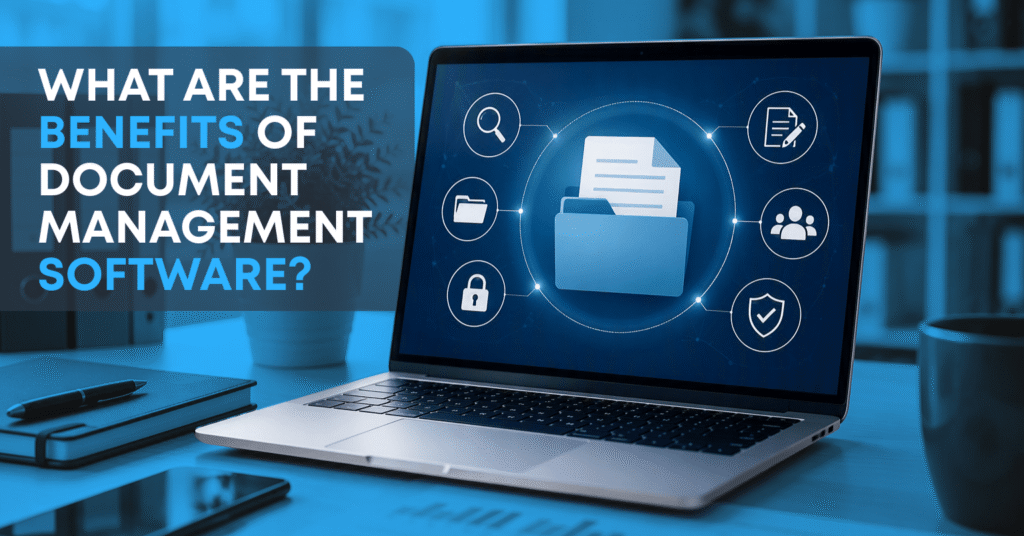
What Are the Benefits of Document Management Software?
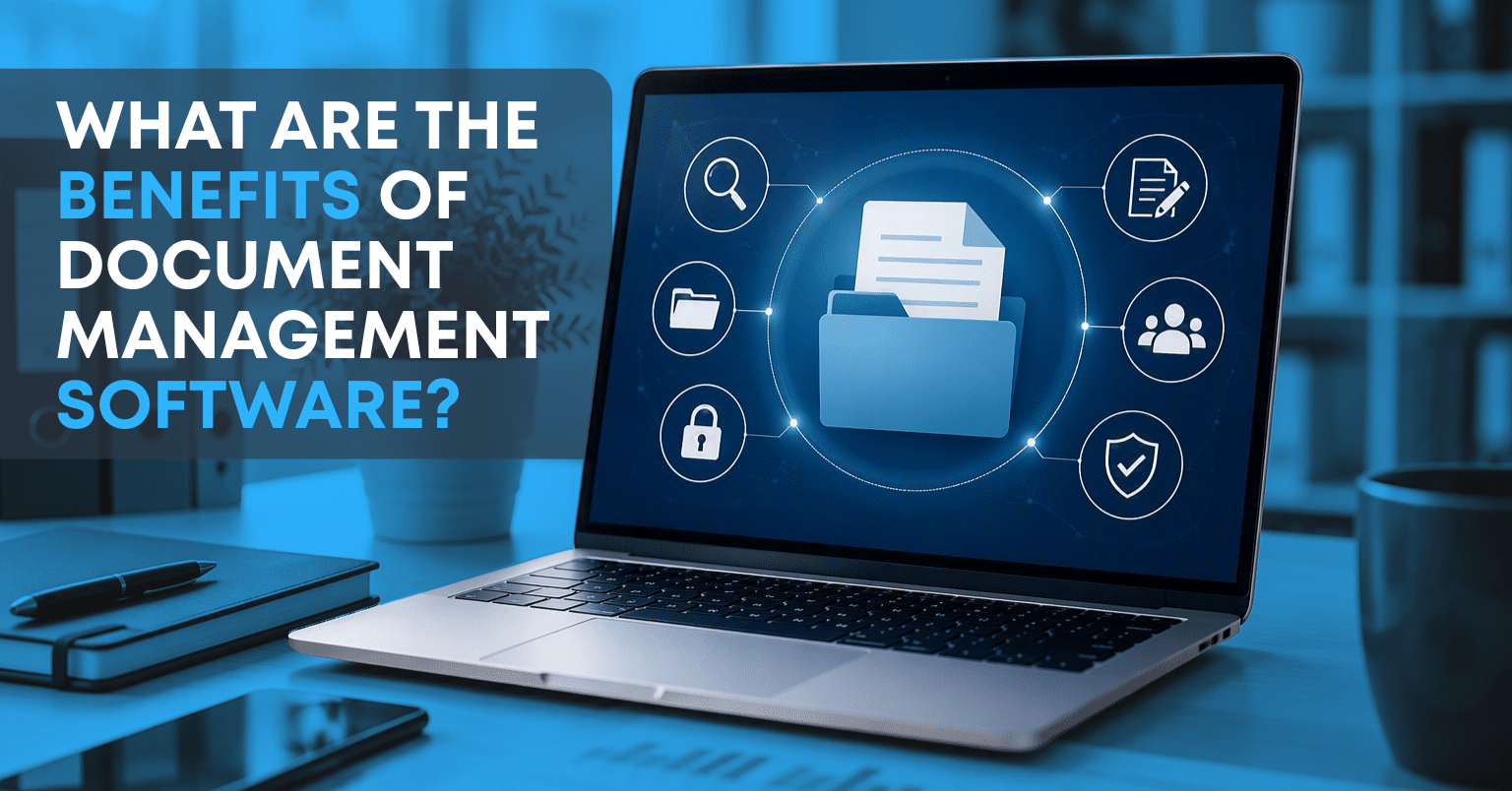
What Are the Benefits of Document Management Software?

Discover how document management software improves organisation, productivity, security, compliance, collaboration, costs, and business continuity.

In today’s fast-paced business environment, organisations generate and manage vast amounts of information every day. From contracts and invoices to employee records and customer correspondence, documents are at the heart of nearly every business process. However, relying on paper-based systems or disorganised digital storage can lead to inefficiencies, security risks, and compliance challenges. This is where Document Management Software (DMS) can make a significant difference.

A modern document management solution provides a centralised platform for storing, organising, securing, and accessing business documents. By replacing outdated processes with a streamlined digital approach, businesses can improve productivity, strengthen security, and support long-term growth.

Improved Organisation and Accessibility

One of the most valuable benefits of document management software is the ability to store all business documents in a single, central repository. Instead of searching through filing cabinets, shared drives, email attachments, or multiple systems, employees can quickly locate files using powerful search functions and metadata.

This immediate access to information reduces time wasted searching for documents and ensures staff can find the information they need when they need it. Whether employees are working in the office, from home, or on the move, authorised users can securely access documents from virtually anywhere.

Increased Productivity and Efficiency

Manual document processes can be both time-consuming and prone to errors. Filing paperwork, locating records, requesting approvals, and sharing documents between departments often create unnecessary delays and administrative burdens.

Document management software automates many of these routine tasks. Features such as workflow automation, digital approvals, and document version control help streamline business processes and eliminate bottlenecks. Employees spend less time on administration and more time focusing on high-value activities that contribute to business growth.

Additionally, because everyone works from the most up-to-date document version, productivity improves and the risk of mistakes is significantly reduced.

Looking for a new career?

Enhanced Security and Data Protection

Businesses handle sensitive information every day, including financial records, customer data, contracts, and confidential company information. Protecting these documents is essential, particularly as cyber threats continue to grow.

A robust document management system includes advanced security features such as role-based access controls, encryption, audit trails, and multi-factor authentication. These measures ensure that only authorised individuals can access specific documents and that all document activity is recorded.

By implementing stronger security controls, organisations can reduce the risk of data breaches, accidental data loss, and unauthorised access to critical business information.

Better Compliance and Governance

Many industries operate under strict regulatory requirements relating to data protection, document retention, and information management. Meeting these obligations manually can be both challenging and resource-intensive.

Document management software helps businesses maintain compliance by automatically enforcing document retention policies, tracking changes, and maintaining complete audit histories. This makes it easier to demonstrate compliance during audits and inspections while reducing the risk of penalties associated with poor record management.

A structured approach to document governance also improves accountability across the organisation and ensures that documents are managed consistently throughout their lifecycle.

Improved Collaboration

Effective collaboration is essential in today’s hybrid and remote working environments. Teams often need to review, update, and share documents across departments and locations.

Document management software enables secure collaboration by allowing multiple users to work on documents while maintaining version control. Employees can easily share files, review changes, and manage approvals without relying on long email chains or duplicate file copies.

This creates a single source of truth for business information, helping teams work more efficiently and make decisions with greater confidence.

 

Reduced Costs

Paper-based document storage comes with hidden costs that many organisations underestimate. Printing, filing, storage space, document retrieval, and manual administration all contribute to ongoing operational expenses.

By digitising documents and automating workflows, businesses can significantly reduce these costs. Employees spend less time searching for information, physical storage requirements decrease, and paper consumption is minimised.

Over time, these efficiencies can deliver a strong return on investment whilst supporting broader sustainability initiatives and reducing environmental impact.

Strengthened Business Continuity

Unexpected events such as system failures, cyber incidents, natural disasters, or human error can severely disrupt business operations. Losing access to critical documents can create significant operational and financial challenges.

Document management software helps protect valuable business information through secure cloud storage, automated backups, and disaster recovery capabilities. In the event of an interruption, documents can be quickly recovered, enabling teams to continue working with minimal disruption.

This resilience ensures that essential information remains available when it matters most and supports a robust business continuity strategy.

Conclusion

Document management software has become an essential tool for modern organisations seeking to improve efficiency, security, and compliance. By centralising information, automating processes, strengthening collaboration, and reducing costs, a document management system helps businesses work smarter and more effectively.

Whether you are a small business looking to improve organisation or a larger enterprise focused on compliance and governance, investing in document management software can deliver substantial long-term benefits. In an increasingly digital world, effective document management is no longer a luxury but a critical component of business success.

Tell Centrecom what your organisation needs and discover how a tailored outsourcing solution can support service quality, customer care and operational efficiency.
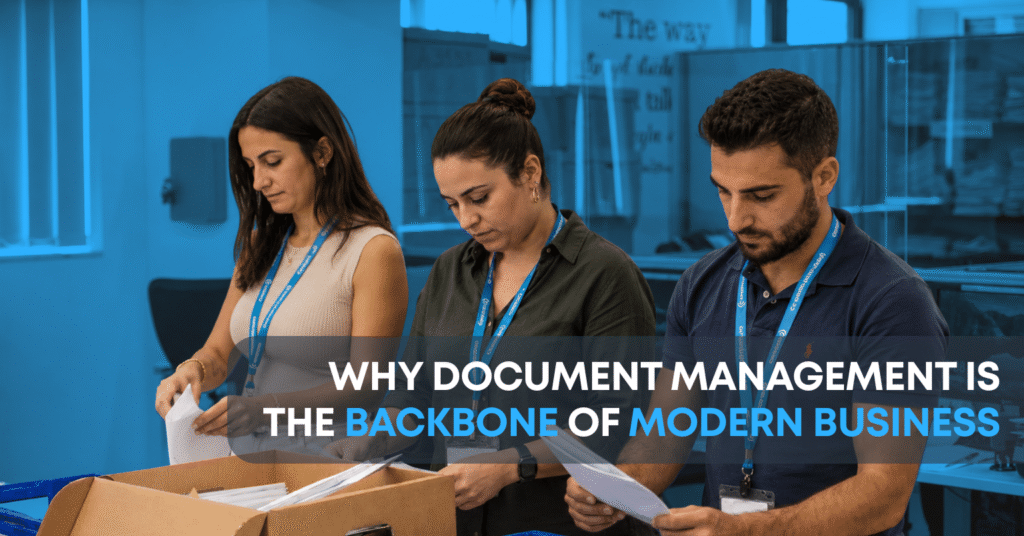
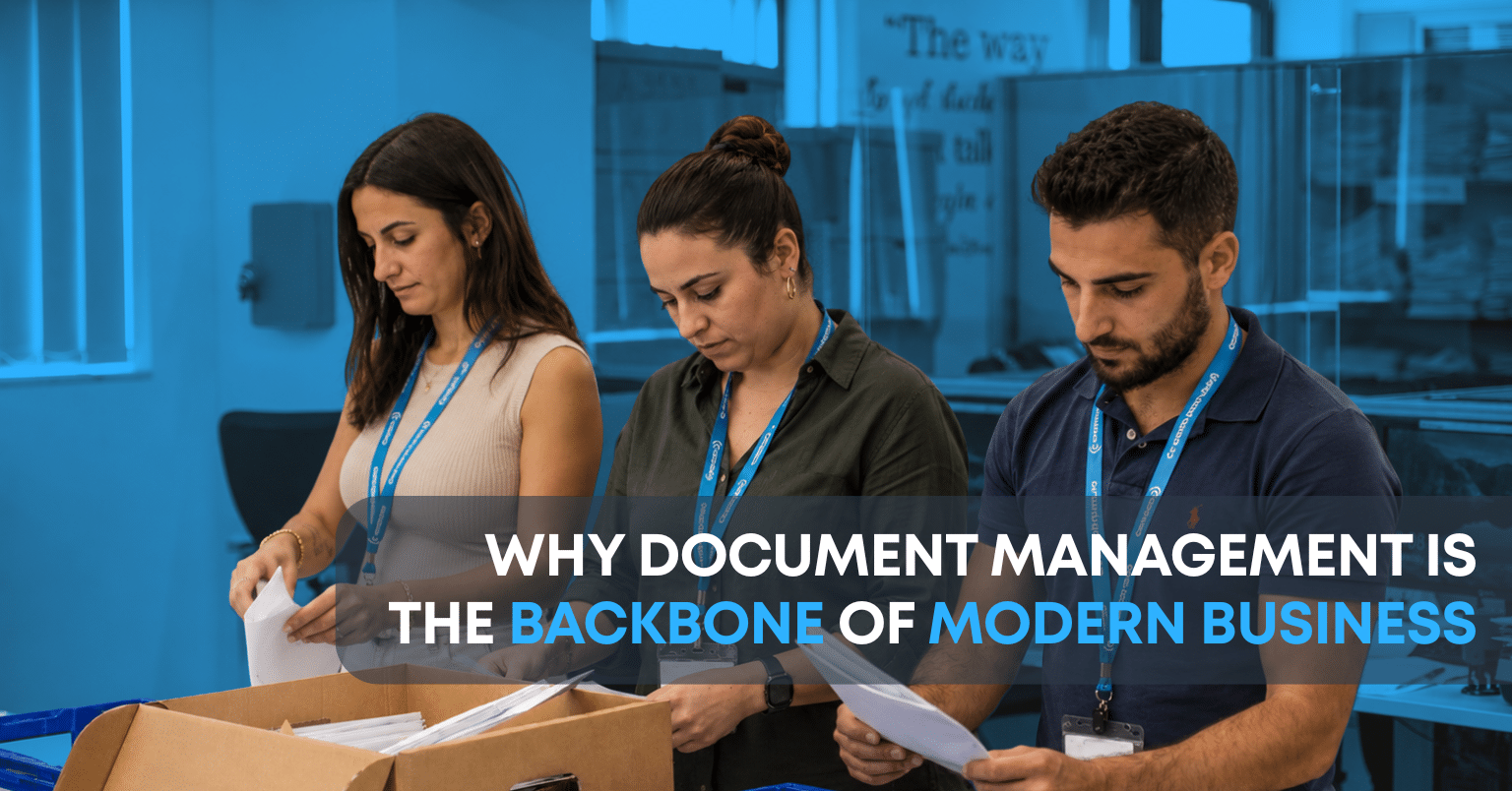
Why Document Management Is the Backbone of Modern Business

Why Document Management Is the Backbone of Modern Business

Effective document management is essential for modern businesses looking to improve efficiency, strengthen security, and support compliance.

In today’s fast-paced business environment, information is one of an organisation’s most valuable assets. From contracts and invoices to employee records and customer communications, businesses generate and handle thousands of documents every year. Yet many organisations still rely on outdated filing systems, disconnected storage locations, or manual processes that make finding and managing information unnecessarily difficult. This is where effective document management becomes essential. At Centrecom, we understand that document management is far more than simply storing files. It is about creating a secure, organised, and efficient system that allows businesses to access the information they need, when they need it, while reducing risks and improving productivity.

The Challenge of Document Overload

As businesses grow, so does the volume of information they must manage. Without a structured document management strategy, organisations often face common challenges:

  • Time wasted searching for documents
  • Duplicate or outdated files
  • Limited visibility across departments
  • Increased security and compliance risks
  • Rising storage and administrative costs

Even a few minutes spent searching for a document can quickly add up across an entire workforce. When employees cannot access the right information efficiently, productivity suffers, decision-making slows down, and customer service can be impacted.

what to know more

Improving Efficiency Across the Organisation

A modern document management solution centralises business information and makes it easily accessible to authorised users. Instead of searching through filing cabinets, network drives, or email inboxes, employees can quickly locate documents using intelligent search functions and organised digital repositories. This not only saves valuable time but also improves collaboration. Teams can share information more effectively, work on the latest version of documents, and avoid the confusion that often comes with multiple copies being stored in different locations. By streamlining document workflows, businesses can reduce manual tasks, accelerate approvals, and ensure critical information moves efficiently throughout the organisation.

Strengthening Security and Compliance

Protecting sensitive information has never been more important. Businesses handle confidential data every day, including customer records, financial information, and employee documentation. Without proper controls in place, organisations can expose themselves to security breaches, data loss, and compliance issues. A professional document management system provides robust security features such as permission-based access, audit trails, encryption, and automated retention policies. These measures help ensure that sensitive information is only accessible to authorised personnel while maintaining a clear record of document activity. For organisations operating in regulated industries, effective document management also supports compliance requirements by ensuring documents are stored, retained, and disposed of according to applicable standards and regulations.

Supporting Business Continuity

Unexpected events such as hardware failures, cyber incidents, or natural disasters can disrupt business operations and jeopardise critical information. Relying solely on physical documents or local storage creates unnecessary risks. Digital document management solutions provide secure backups, disaster recovery capabilities, and cloud-based accessibility, helping organisations maintain business continuity even during challenging circumstances. Employees can continue to access essential information and perform their duties regardless of location, ensuring minimal disruption to operations.

Enabling Digital Transformation

Digital transformation is no longer a future objective; it is a business necessity. Organisations that embrace digital processes are better positioned to adapt to changing market demands, improve customer experiences, and operate more efficiently. Document management serves as a foundation for this transformation. By digitising and organising information, businesses can automate workflows, integrate systems, and create a more agile working environment. Whether supporting remote work, improving service delivery, or reducing paper usage, document management plays a vital role in modern business success.

Partner with Centrecom

At Centrecom, we help organisations unlock the full value of their information through secure, scalable, and efficient document management solutions. Our expertise enables businesses to streamline operations, improve compliance, enhance security, and support long-term growth. In an increasingly digital world, effective document management is not just an operational necessity. It is the backbone of a successful business. Investing in the right solution today can deliver lasting benefits for productivity, security, and organisational performance for years to come.

Tell Centrecom what your organisation needs and discover how a tailored outsourcing solution can support service quality, customer care and operational efficiency.

The Silent Revenue Leaks Costing Airlines Millions

The Silent Revenue Leaks Costing Airlines Millions

Airline revenue leakage rarely happens in obvious ways. It builds quietly across ticketing, interline billing, ancillaries, and disconnected systems.

Airline revenue accounting is often treated like any other finance function.

It isn’t.

Behind every ticket sold sits a chain of events; booking, payment, fulfillment, and recognition. Now multiply that by millions of passengers moving across different routes, currencies, and partner airlines. Add constant changes, cancellations, rebookings or no-shows, and what you get isn’t just complexity. It’s fragility.

And where systems become fragile, revenue leaks will follow.

Yet despite this, many airlines operate with a quiet assumption: that their revenue is fundamentally accurate.

That assumption is where the problem begins.

At first glance, everything appears under control. Financial reports are clean. Accounts are reconciled. Compliance with standards like IFRS 15 and ASC 606 is maintained. From a finance perspective, the system works.

But this sense of control is misleading.

Revenue data doesn’t originate in finance, it flows into it. Before it reaches the general ledger, it has already passed through reservation systems, departure control systems, ancillary platforms, and partner airline networks. Each of these layers introduces its own dependencies, delays, and inconsistencies. If something breaks upstream, finance doesn’t detect the root cause, it simply records the outcome.

And that’s how revenue leakage becomes invisible.

Looking for a new career?

Consider the lifecycle of a ticket.

A passenger books a flight weeks or months in advance. Between that moment and the actual departure, anything can happen. The passenger might cancel, rebook, or simply not show up. Each of these outcomes affects when and how revenue should be recognized. In theory, this is straightforward. In practice, airlines often rely on assumptions instead of continuously validated data.

When those assumptions are wrong, revenue is either recognized too early, creating compliance exposure or delayed unnecessarily, impacting cash flow. Neither scenario is harmless, and both are more common than most airlines are willing to admit.

The complexity increases significantly when multiple airlines are involved in a single journey.

Through interline and codeshare agreements, revenue must be divided between partners. On paper, the rules for splitting that revenue are defined. In reality, execution is far less reliable. Data from partner airlines may arrive late or incomplete. Proration rules may be applied inconsistently. Disputes over revenue allocation can take months to resolve, if they are resolved at all.

At scale, even minor discrepancies in these processes translate into substantial financial losses. Revenue that has already been earned sits uncollected, misallocated, or written off.

Then there’s ancillary revenue.

Arguably one of the most profitable parts of the airline business.

Baggage fees, seat selection, upgrades, and onboard sales all contribute significantly to margins. But unlike ticket revenue, these streams are often fragmented across multiple systems. A seat upgrade purchased through a mobile app, a baggage fee paid at the airport, and an in-flight purchase may all be recorded in different environments.

Without strong integration and reconciliation, gaps are inevitable. Transactions go missing, data is duplicated, or reporting lags behind actual activity. The result is a paradox: some of the highest-margin revenue in the business is also the least controlled.

Global operations introduce another layer of risk.

Airlines sell tickets in multiple currencies but report in one. This creates constant exposure to exchange rate fluctuations, timing differences between transaction and recognition, and manual adjustments that don’t always reconcile cleanly. Individually, these discrepancies may seem insignificant. Across millions of transactions, they quietly erode margins.

At this point, it’s tempting to assume the problem lies in revenue recognition itself.


But that’s not entirely accurate.

Standards like IFRS 15 and ASC 606 provide clear frameworks. The issue is not the rules, it’s the data used to apply them. When revenue recognition depends on incomplete or inconsistent operational inputs, even the most compliant processes can produce misleading results.

This leads to a critical realisation: finance is not where revenue errors begin.

By the time data reaches finance teams, the underlying issues have already been embedded. Assumptions have been made. Gaps have compounded. Finance doesn’t diagnose these problems, it formalises them.

That’s why so many airlines operate with reports that appear accurate while underlying leakage continues unchecked.

The root cause is not a lack of effort or expertise. It’s a structural gap in ownership.

● Operations focus on running flights.
● Commercial teams focus on selling seats.
● Finance focuses on reporting results.

But no single function owns the integrity of revenue across the entire lifecycle.


And when ownership is fragmented, accountability disappears.

Leading airlines are starting to address this but not by refining reports. They’re changing the way revenue is managed altogether.

Instead of treating revenue accounting as a back-end activity, they treat it as a continuous control system. That means reconciling operational and financial data in real time, automating validation across systems, and actively identifying leakage as it occurs, not weeks later during month-end close.

It also means recognising that airline revenue accounting requires specialised expertise. The combination of high transaction volumes, complex partnerships, and operational variability is not something generic processes can handle effectively.

The takeaway is simple, but uncomfortable.

Airlines don’t lose revenue in obvious ways. They lose it in small, repeated breakdowns across systems, partners, and timing gaps.

Individually, these issues seem minor.
Collectively, they cost millions.

And because they rarely surface clearly in financial reports, they’re often accepted as part of doing business.

They shouldn’t be.

At Centrecom, we specialise in airline revenue accounting, helping airlines move beyond surface-level accuracy and gain real control over their revenue lifecycle.

Because clean numbers don’t always mean correct numbers.

Tell Centrecom what your organisation needs and discover how a tailored outsourcing solution can support service quality, customer care and operational efficiency.

Digital Archiving in 2025: Overcoming Security Pitfalls Before They Cost You

Digital Archiving in 2025: Overcoming Security Pitfalls Before They Cost You

As businesses generate more data than ever, digital archiving is no longer just about storage—it’s about security.

The security pitfalls of digital archiving are often overlooked until it’s too late. In today’s fast-paced digital world, companies are generating more data than ever before. From contracts and financial records to customer data and internal reports, businesses face the dual challenge of storing vast amounts of information while ensuring it remains secure. Without careful planning, digital archiving can expose organizations to costly data breaches, compliance violations, and operational risks.

The Growing Importance of Digital Archiving

Digital archiving is no longer just a convenience—it’s a necessity. Businesses are moving away from physical storage and paper-heavy workflows to cloud-based systems, automated document management platforms, and AI-driven archiving tools. The benefits are clear: faster retrieval times, reduced storage costs, and improved collaboration. However, these advantages come with potential risks that, if unaddressed, can have serious financial and reputational consequences.


Looking for a new career?

Common Security Pitfalls in Digital Archiving

Despite its benefits, digital archiving is not without challenges. Here are some common security pitfalls businesses face today:

  1. Inadequate Access Controls
    Granting employees unrestricted access to sensitive documents increases the risk of internal data breaches. Without role-based permissions, confidential information can fall into the wrong hands, either accidentally or maliciously.
  2. Weak Encryption Standards
    Storing data without proper encryption leaves it vulnerable to cyberattacks. Outdated encryption methods may no longer meet compliance standards, putting sensitive data at risk.
  3. Poor Backup and Disaster Recovery Planning
    Digital archives are only as secure as their backup systems. Companies that fail to implement reliable disaster recovery protocols risk permanent data loss in the event of ransomware attacks, system failures, or natural disasters.
  4. Neglecting Regulatory Compliance
    Industries such as finance, healthcare, and legal services have strict data retention and security requirements. Failure to comply with regulations like GDPR, HIPAA, or FINRA can result in hefty fines and legal challenges.
  5. Overlooking Cloud Security Risks
    Cloud-based archiving solutions offer flexibility but also introduce potential vulnerabilities. Misconfigured storage, weak passwords, and third-party vendor risks can all compromise data integrity.

Strategies to Overcome Digital Archiving Security Risks

The good news is that many security pitfalls can be mitigated with proactive measures. Here’s how companies can strengthen their digital archiving practices in 2025:

  1. Implement Role-Based Access Controls (RBAC)
    Limit access to sensitive documents based on job function. Regularly review permissions to ensure employees only access the information they need.
  2. Adopt Strong Encryption Practices
    Encrypt data both at rest and in transit using industry-standard protocols. Modern encryption ensures that even if a breach occurs, the information remains unreadable.
  3. Develop a Robust Backup and Disaster Recovery Plan
    Maintain multiple backups in secure, geographically diverse locations. Regularly test recovery procedures to ensure data can be restored quickly and accurately in an emergency.
  4. Stay Compliant with Industry Regulations
    Conduct regular audits to verify that your archiving practices meet legal and industry-specific requirements. Keeping compliance front and centre protects your business from fines and reputational damage.
  5. Vet Cloud Providers Carefully
    Choose cloud vendors with strong security certifications and transparent practices. Ensure that data stored offsite is protected with multi-factor authentication, encryption, and regular security monitoring.


Embracing the Future of Secure Digital Archiving

As digital archiving continues to evolve, businesses must stay ahead of emerging threats. Leveraging AI-driven security monitoring, automated compliance checks, and advanced encryption technologies will help organizations maintain both efficiency and security. Companies that fail to address these challenges risk costly breaches, operational downtime, and regulatory penalties.

Digital archiving in 2025 is more than just storing documents—it’s about safeguarding your company’s most valuable asset: information. By recognizing common security pitfalls and implementing proactive measures, businesses can protect themselves from costly mistakes and confidently embrace the benefits of a digital-first future.

Tell Centrecom what your organisation needs and discover how a tailored outsourcing solution can support service quality, customer care and operational efficiency.

Why Outsourcing is a Smart Move: Solving the Staffing Crisis in Aviation

Why Outsourcing is a Smart Move: Solving the Staffing Crisis in Aviation

Airlines are facing a staffing crisis in 2025, with labour shortages, rising demand, and high attrition rates straining operations.

Solving the staffing crisis has become one of the aviation industry’s biggest challenges in 2025. Airlines around the world are under immense pressure as rising passenger demand collides with a shortage of qualified workers, forcing them to do more with less.

To stay competitive, airlines are turning to new strategies for solving these workforce challenges. One solution stands out: outsourcing. Once seen primarily as a cost-saving tactic, outsourcing is now a powerful way to bridge staffing gaps, maintain service quality, and fuel growth in an increasingly complex aviation landscape.

✈️ The Aviation Staffing Crisis in 2025

From pilots and cabin crew to ground staff and call centre agents, the aviation workforce has been hit hard by several challenges:

  • Labour shortages: Many skilled workers left the industry during the pandemic and never returned.
  • High attrition rates: Competitive job markets make it difficult to retain experienced staff.
  • Training bottlenecks: Specialised aviation roles require extensive training, slowing the pace of hiring.
  • Rising demand: Passenger numbers continue to climb, especially during peak travel seasons.

The result? Longer wait times, overwhelmed support staff, and frustrated customers. For airlines, the stakes are high: service disruptions can lead to lost loyalty, damaged reputations, and reduced revenue.

Looking for a new career?

Outsourcing as a Strategic Solution

Outsourcing allows airlines to tap into global talent pools and bring on experienced professionals quickly, without the long lead times and high costs associated with traditional hiring. Instead of struggling to recruit and train internally, airlines can partner with outsourcing providers who already have the expertise, technology, and scale in place.

This approach delivers several critical benefits:

1. Rapid Access to Skilled Talent

Outsourcing providers specialize in building teams of trained professionals—from customer service agents to IT specialists—ready to step in and support operations. This helps airlines:

  • Fill roles quickly without long recruitment cycles
  • Access niche skills like multilingual support or revenue accounting
  • Ensure consistent service even during staffing shortages

By bridging gaps immediately, airlines can maintain smooth operations and avoid disruptions.

2. Scalability During Peak Seasons

Air travel demand fluctuates dramatically throughout the year. Outsourcing gives airlines the flexibility to scale staffing up or down based on seasonal demand.

  • During summer or holiday peaks, outsourcing partners can ramp up support teams quickly.
  • During off-peak months, airlines can scale back without the costs of maintaining a large permanent workforce.

This elasticity is vital in a volatile industry where passenger volumes can shift overnight.

3. Multilingual and 24/7 Support

With passengers flying across multiple time zones, customer service has to be available around the clock. Outsourcing enables airlines to offer 24/7 multilingual support, ensuring every customer feels heard and valued.

This not only improves customer satisfaction but also boosts loyalty—an essential differentiator in today’s competitive aviation market.

4. Leveraging Technology and AI

Many outsourcing partners bring advanced technologies such as AI-driven chatbots, predictive analytics, and automation tools. For airlines, this means:

  • Faster response times
  • More personalized interactions
  • Reduced workload for in-house staff

By combining human expertise with smart technology, outsourcing providers help airlines manage staffing gaps without sacrificing service quality.

5. Refocusing on Core Operations

Perhaps most importantly, outsourcing allows airlines to refocus their internal teams on what they do best: delivering safe, reliable, and memorable travel experiences.

With day-to-day support functions handled by outsourcing specialists, airline leaders can prioritise long-term goals like:

  • Route expansion
  • Fleet modernization
  • Sustainability initiatives
  • Enhancing onboard experiences

Final Thoughts

The staffing crisis in aviation is real, but it doesn’t have to ground progress. By embracing outsourcing, airlines can adapt quickly, reduce strain on internal teams, and maintain high standards of service—even in the face of labor shortages.

In 2025 and beyond, outsourcing is more than a stopgap measure—it’s a smart move that ensures airlines remain competitive, resilient, and ready for whatever turbulence the future brings.


Tell Centrecom what your organisation needs and discover how a tailored outsourcing solution can support service quality, customer care and operational efficiency.

The Competitive Edge: Key Benefits of Outsourcing for Airlines in 2025

The Competitive Edge: Key Benefits of Outsourcing for Airlines in 2025

Discover how outsourcing is helping airlines stay competitive in 2025 by cutting costs, improving customer service, and enabling flexible, scalable operations.

In today’s rapidly evolving aviation industry, airlines are under increasing pressure to reduce costs, enhance customer experiences, and stay agile in the face of economic shifts, labour shortages, and rising passenger expectations. In 2025, one strategic move continues to stand out: outsourcing.

Far from being just a cost-cutting measure, outsourcing has become a powerful tool for innovation, growth, and maintaining a competitive edge—helping airlines streamline operations, access global talent, and deliver seamless, customer-first service at scale.

So, what are the Key Benefits of Outsourcing?

1. Cost Efficiency Without Compromise

For airlines, profitability hinges on managing thin margins. Outsourcing non-core functions—such as customer service, IT support, revenue accounting, or baggage claim processing—allows airlines to reduce overhead without compromising quality.

By partnering with expert providers in lower-cost regions, airlines can:

  • Avoid heavy infrastructure investment
  • Reduce hiring and training expenses
  • Convert fixed costs into variable costs

This financial flexibility is especially critical in an industry where economic unpredictability is the norm. Airlines can reinvest savings into core priorities like route expansion, aircraft modernization, or digital transformation—driving long-term competitiveness.

2. Access to Specialised Skills and Technology

Aviation outsourcing providers bring deep industry knowledge, cutting-edge tools, and access to a global talent pool. Whether it’s AI-powered chatbots, automated ticketing support, or multilingual service desks, these partners invest heavily in tech and training—so airlines don’t have to.

This enables:

  • Faster onboarding of tech-driven solutions
  • Real-time data analytics for customer interactions
  • High-quality service across diverse markets

In a competitive travel landscape, these capabilities allow airlines to offer faster, smarter service without the burden of building and maintaining infrastructure internally.

3. Scalability for Seasonal & Demand Shifts

Air travel is highly seasonal—and unpredictable. Outsourcing gives airlines the ability to scale support teams quickly during high-demand periods and scale down during lulls.

This kind of flexibility is especially valuable for:

  • Managing spikes during holidays or major events
  • Adjusting to sudden route changes or travel disruptions
  • Supporting irregular operations with agility

For example, when global events like summer travel booms or winter storms create sudden surges in customer support needs, outsourcing partners can onboard trained agents in days—not weeks.

Looking for a new career?

4. Around-the-Clock, Multilingual Customer Support

Today’s travellers expect real-time, always-available service across multiple channels. With outsourcing, airlines can offer 24/7 multilingual support—meeting passengers wherever they are, in whatever language they speak.

Benefits include:

  • Faster issue resolution
  • Improved customer satisfaction (CSAT) scores
  • Support continuity across time zones

By leveraging global delivery models and round-the-clock coverage, airlines ensure passengers never feel stranded—digitally or physically.

5. Focus on Core Business and Innovation

Many BPO partners specialize in AI-driven solutions, offering automation that enhances efficiency while improving service quality. Through AI integration, airlines can:

  • Automate booking changes and refund processes
  • Predict customer issues before they arise
  • Provide intelligent, contextual support across channels

This tech-forward approach not only lowers operational costs but also improves the overall customer experience—making it easier for airlines to meet rising digital expectations.

6. Focus on Core Business and Growth

By outsourcing non-core but essential functions, airlines can refocus internal resources on strategic priorities—like route optimization, fleet upgrades, or sustainability goals.

It’s about working smarter:

  • Let specialists handle daily operations
  • Empower internal teams to lead innovation
  • Stay lean, efficient, and future-ready

In doing so, airlines position themselves to move faster and adapt more easily to market demands.

Final Thoughts

In 2025, outsourcing is no longer a tactical cost-saving play—it’s a strategic advantage. From reducing complexity to enhancing customer experience and unlocking agility, outsourcing empowers airlines to adapt, compete, and thrive in an increasingly demanding travel environment.

The airlines that lead the way will be those that combine operational efficiency with human-centric service—delivered through trusted outsourcing partners. In a fast-changing world, that edge could make all the difference.

Tell Centrecom what your organisation needs and discover how a tailored outsourcing solution can support service quality, customer care and operational efficiency.

10 Game-Changing Omni-Channel Customer Service Trends for 2025

10 Game-Changing Omni-Channel Customer Service Trends for 2025

Discover the top 10 omni-channel customer service trends for 2025, from AI-driven support to seamless, multi-channel experiences.

Customer expectations are evolving faster than ever. In 2025, it’s no longer enough to offer support through multiple channels—what truly matters is delivering a seamless, consistent experience across every single touchpoint. Whether a customer starts with a chatbot and finishes with a phone call, they expect the conversation to flow naturally, without needing to repeat themselves.

Omni-channel customer service is now a key differentiator. It’s not just about being available—it’s about being connected, responsive, and personalized. As businesses adapt to a more digital and on-demand world, those who stay ahead of the curve will earn lasting loyalty.

Here are 10 game-changing omni-channel trends that are reshaping customer service in 2025.

1. Messaging Apps Become the Primary Support Channel

From WhatsApp and Facebook Messenger to Instagram DMs, messaging platforms are now front-line service tools. Customers expect real-time, mobile-friendly communication—and brands are embedding support directly into these apps.

Pro tip: Be where your customers are. Integrating messaging apps into your service stack increases convenience and customer satisfaction.

2. AI Isn’t Just a Buzzword—It’s Your Agent’s Copilot

AI is no longer replacing agents—it’s empowering them. In 2025, generative AI is drafting replies, summarizing customer interactions, suggesting next steps, and even detecting sentiment in real time.

Why it matters: This speeds up response times and ensures consistency, while keeping the human touch when it’s needed most.

3. Unified Customer Journeys Across Every Channel

Customers don’t think in channels—they think in experiences. Businesses are investing in platforms that provide a single, 360-degree view of each customer, no matter where or how they reach out.

Example: A customer starts with a chatbot on your website, continues via SMS, and finishes with a live agent—all without repeating themselves.

4. Predictive Support Is the New Reactive

Thanks to machine learning, brands are getting ahead of customer issues. Whether it’s a delayed shipment, a subscription renewal, or a usage spike, proactive alerts and interventions are becoming the norm.

Result: Happier customers, reduced inbound volume, and fewer angry reviews.


5. Channel-less Is the New Omni-channel

The future isn’t about more channels—it’s about removing the boundaries between them. In 2025, customers move effortlessly between chat, email, phone, or social without ever starting over.

Think fluid experiences instead of fragmented ones

Looking for a new career?


6. Siloed Support Teams Are on the Way Out

Support teams are being restructured into customer experience hubs, trained across all platforms. This boosts flexibility and allows businesses to assign agents based on complexity, not just channel.

Takeaway: Unified teams = unified experience.

7. Privacy-First Support Across Channels

As support goes multi-platform, security becomes critical. Businesses are tightening up data encryption, improving authentication (biometrics, SSO), and ensuring compliance with global privacy regulations like GDPR and CCPA.

Customers want convenience, but they also want to know their data is safe.

8. Deep Integration with CRMs and Backend Systems

Support isn’t just about answering questions—it’s about solving problems fast. Deep integrations with CRMs, e-commerce platforms, and internal tools allow agents to access everything from order history to product specs in real time.

Bonus: No more switching tabs = faster resolutions.


9. Real-Time Analytics and Sentiment Tracking

Modern omni-channel platforms are using AI to analyze voice tone, chat language, and customer behavior. These insights power real-time coaching, trigger escalation flows, and guide product improvements.

You’re not just answering questions—you’re learning from every interaction.

10. Global Support, Local Vibes

In 2025, businesses are scaling globally but speaking locally. That means localized messaging, multilingual support agents, culturally relevant interactions, and region-specific service hours.

The goal: Make every customer feel like your only customer—wherever they are.


Final Thoughts: Omni-channel Is Now Table Stakes

The way businesses approach customer service is changing—and fast. Omni-channel is no longer a buzzword; it’s the new standard. Customers expect smooth transitions, fast answers, and personalized experiences, no matter how or where they reach out.

Companies that embrace these trends will stand out in 2025—not just for solving problems, but for creating memorable, frictionless experiences that drive loyalty and long-term growth. The future of customer service is connected, intelligent, and deeply human.

Tell Centrecom what your organisation needs and discover how a tailored outsourcing solution can support service quality, customer care and operational efficiency.

Mastering Document Management: 4 Must-Have Functions for Success

Mastering Document Management: 4 Must-Have Functions for Success

Master document management with 4 key functions to boost efficiency, compliance, and security in a digital-first world.

The evolution of digital technologies has transformed the way documents are created, shared, and stored. While one might assume this has simplified document management, in reality, it has introduced new complexities. Organizations continue to struggle with challenges such as locating documents efficiently, maintaining security and regulatory compliance, facilitating seamless collaboration, and streamlining document-driven processes.

Emerging trends in document management bring both advantages and obstacles. The adoption of cloud-based solutions, artificial intelligence (AI), and machine learning has enhanced automation and accessibility, yet it also raises concerns around data privacy, integration, and system compatibility. Businesses must also address the challenge of integrating document management systems with other enterprise applications to create cohesive workflows and a well-connected digital ecosystem.

Despite these advancements, the need for effective document management remains as critical as ever. A well-structured approach to managing documents is essential for operational efficiency, regulatory adherence, and long-term business success

What is Document Management?

Document management encompasses the processes involved in handling documents both within and outside an organization, whether in physical or digital form. This includes every stage of a document’s lifecycle, from creation and storage to organization, security, sharing, and updates.

However, document management goes beyond:

  • Simply scanning and storing paper documents, this is just one component of its broader functionality.
  • Serving as a basic storage solution, whether on a hard drive or in the cloud.
  • Being a one-time implementation; it is a continuous and evolving process that requires ongoing optimization and management.

Looking for a new career?

What are the 4 Key Functions of Document Management

  1. Document Capturing
    Document capturing refers to the acquisition of business documents, whether in physical or digital form. For physical documents, this process involves sorting and storing relevant materials in designated locations such as filing cabinets. In a digital environment, document capturing includes scanning physical records into electronic formats. Document management software (DMS) can also extract key data, ensuring that information is stored efficiently in a digital repository.

  2. Indexing and Metadata Management
    Indexing ensures that documents are organized for easy retrieval. In physical document management, this often involves alphabetizing records. Digital document management systems allow users to tag documents with metadata, such as department names, document types, or location details. These tags enable users to quickly locate documents through keyword-based searches, streamlining access and retrieval.

  3. Document Search and Retrieval
    This step involves locating and accessing specific documents as needed. In traditional paper-based systems, retrieval requires manually searching through filing cabinets. Digital document management simplifies this process by enabling users to conduct keyword searches based on document type, client name, or content-specific parameters, significantly improving efficiency and accessibility.

  4. Document Retention and Archiving
    Retention and archiving serve distinct purposes. Document retention involves securely storing documents for future reference and compliance with regulatory requirements. Archiving, on the other hand, involves moving older or less critical documents to secondary storage for retrieval only when necessary.
    In physical storage, archiving typically means relocating older records to a storage room or off-site facility to free up space. Digital document retention eliminates the problem of overfilled cabinets but still requires efficient storage management. Archiving in a digital system often involves compressing files to reduce storage demands, making them inaccessible until decompressed when needed.

So Why is Document Management Important?

Recordkeeping plays a crucial role in maintaining accurate historical data, ensuring regulatory compliance, and providing a clear audit trail for business activities. A well-structured document management process creates a comprehensive record that enables auditors, regulators, and internal stakeholders to access essential business information efficiently.

Industries such as financial services, investment management, and pharmaceutical production must adhere to strict document retention regulations. Effective document management minimizes compliance risks by ensuring that all critical records are systematically stored, well-organized, and easily accessible to authorized personnel.

As companies grow and expand, the complexity of document management increases. A well-implemented system enhances information retrieval, fosters collaboration, and ensures that employees can access relevant data without delays. Additionally, it strengthens data security, streamlines workflows, and reduces operational inefficiencies. These benefits translate into cost savings, improved disaster recovery preparedness, and a more agile response to business and regulatory challenges.

Ultimately, prioritizing effective document management is essential for any organization looking to optimize operations, maintain compliance, and stay competitive in today’s digital-first business environment.

Tell Centrecom what your organisation needs and discover how a tailored outsourcing solution can support service quality, customer care and operational efficiency.

Call Centre vs Contact Centre: The Game-Changing Difference for Your Business

Call Centre vs Contact Centre: The Game-Changing Difference for Your Business

Contact Centre vs Call Centre – What is the difference and what is the best solution for your business?

For many businesses, the call centre serves as the backbone of customer service, handling both inbound support requests and outbound calls. Traditionally, the term “call centre” was used because phone support was the primary method of communication. However, modern customer service has expanded beyond just phone calls, with agents now engaging customers across multiple channels. As a result, the call centre has transformed into what is now known as the contact centre.

What is a Contact Centre?

The term “contact centre” reflects the many ways businesses can now engage with customers beyond just telephone calls. Evolving customer expectations and advancements in technology have transformed the traditional call centre model, enabling businesses to enhance the customer experience through multiple communication channels.

While call centre agents primarily handle inbound and outbound calls—whether via traditional phone lines or Voice over Internet Protocol (VoIP)—contact centre agents manage interactions across a variety of platforms. In a multichannel contact centre, for example:

• Customers can make use of chat bots and live-chat systems.
• Queries are handled via email.
• Social Media Monitoring and Listening are done over various social media channels.
• Customer inquiries received via email are forwarded to an agent for a phone follow-up.

Most companies integrate their contact centres with Customer Relationship Management (CRM) systems, allowing them to efficiently track, manage, and coordinate customer interactions.

However, contact centres do face challenges, particularly when dealing with complex infrastructure. Many organisations rely on off-the-shelf software or a customised mix of technologies from different vendors, leading to a fragmented system. Some businesses adopt cloud-based solutions, but if these systems remain isolated from the company’s broader network, it can result in communication silos that hinder efficiency.

What is a Call Centre?

A call centre is a customer service operation, either remote or on-premises, that provides support exclusively over the phone. Depending on the business size, call centres can range from a small team of a few agents to large-scale operations with hundreds of representatives handling customer interactions.

Agents typically manage multiple calls per day, assisting with a variety of issues, from billing enquiries to complex technical support. While some call centres integrate customer relationship management (CRM) software to streamline issue resolution and provide agents with valuable customer insights, many are still in the process of adopting this technology.

Looking for a new career?

The Difference between Call Centres and Contact Centres

The key distinction between a call centre and a contact centre lies in the communication channels they utilise. While call centres rely on traditional phone systems, contact centres embrace a variety of digital and non-digital channels that align with how modern customers prefer to interact with businesses.

Today’s consumers expect seamless support across multiple platforms, devices, and contexts, mirroring their everyday communication habits. Contact centres enable this omnichannel approach, significantly reducing response times for customer requests—whether for technical assistance or order placement—regardless of the communication channel used.

Fast response times are crucial, as they directly impact customer satisfaction and business success. Research shows that 86% of customers are willing to pay more for a product or service if it guarantees a superior experience, with some willing to spend 13% to 18% more. Recognising this, 88% of businesses prioritise customer experience within their contact centres to enhance loyalty and drive growth.

Modern Contact Centre Solutions

To A modern approach to the traditional call centre now allows businesses to deliver the high-quality, real-time customer experience needed to thrive in competitive markets. Rather than relying on off-the-shelf telecom systems with rigid, one-size-fits-all features, an agile contact centre software approach empowers companies to create customised solutions tailored to their needs. This isn’t just an upgrade in technology—it’s a complete reimagining of how contact centre operations are designed and built.


Two key factors are driving the evolution of call centres: digital innovation and shifting customer behaviour. According to a 2020 Dimension Data report, most organisations engage with customers across eight different channels, and 23.2% state that an omnichannel approach is central to their customer journey strategy.
Customers expect businesses to communicate with them on their preferred channels, whether through phone, SMS, or Facebook Messenger. However, the rise of digital channels hasn’t diminished the importance of call centres—on the contrary, customers still value human interaction when seeking support.


Seamless integration is key to creating a personalised, efficient experience. When an IVR system or agent has access to a customer’s full journey—including browsing history, past purchases, and billing details—it significantly enhances the overall customer experience, making interactions feel intuitive and tailored to individual needs.


What is the Best Solution for You?

A call centre may be the right choice if:
• Your primary focus is managing call flows.
• Your customers rely solely on phone calls to contact your business.
• Outbound calls take priority over inbound customer interactions.


A contact centre may be the right choice if:
• Your customers engage with your business through multiple digital channels.
• You prioritise cross-channel reporting for better insights.
• Your business is ready to scale and expand its customer support capabilities.

Tell Centrecom what your organisation needs and discover how a tailored outsourcing solution can support service quality, customer care and operational efficiency.

AI’s 4 Benefits To Revolutionise and Modernise Contact Centres’ Success

AI’s 4 Benefits To Revolutionise and Modernise Contact Centres’ Success

Artificial intelligence (AI) serves to fulfill various roles within contact centres by performing routine tasks, by assisting agents with their jobs.

AI (artificial intelligence) serves a multitude of functions within contact centres, playing a pivotal role in streamlining operations and enhancing customer interactions. Among its many capabilities, A.I. effectively automates repetitive tasks, provides responsive live chat services through virtual agents or chatbots to promptly address customer inquiries, enables the creation of personalised experiences for customers, and delivers predictive analytics to meet customer needs. These functions collectively contribute to the efficiency, effectiveness, and overall success of contact centre operations.

AI for Enhancing Agent Engagement and Productivity

One major insight of A.I. capabilities is the alleviation of pressure on contact centre staff, leading to heightened employee satisfaction. A.I. assists in handling repetitive, mechanical tasks such as collecting names, phone numbers, and interaction summaries. Consequently, contact centre employees can assume more impactful roles, further enhancing their satisfaction.

Employee satisfaction plays a crucial role in fostering positive interactions between customer service representatives and customers, thereby contributing to a more streamline and productive work environment. In such an environment, employees feel a sense of recognition and appreciation for their individual contributions and efforts. This not only boosts morale but also instils a sense of fulfilment in employees, as they perceive themselves as valued members of the team. Consequently, this sense of fulfilment translates into job satisfaction, resulting in a happier and more efficient workplace where employees are motivated to perform at their best.

Looking for a new career?

The Introduction of AI to Modernise Contact Centres

Leveraging A.I. in the contact center can dramatically increase customer satisfaction and brand loyalty and generate a significant impact on revenue. Customers will likely avoid a company if the website is too difficult to navigate and they tend to avoid companies if they’ve had a bad customer experience. 

Utilizing artificial intelligence in the contact centre has the potential to increase and enhance customer satisfaction, foster brand loyalty, and generate a substantial impact on revenue. Customers are inclined to steer clear of companies with overly complex websites and are prone to avoiding businesses following negative customer experiences. Benefits of using A.I. in contact centres include:

  • Automated Call Centre Quality Monitoring:
    Instead of having humans monitor a limited number of calls, such tools can analyse all calls, allowing businesses to gain a more comprehensive understanding of both agent performance and customer experience.
  • Reduction in Customer Response Time:
    Chatbots can cut down on customer hold time by handling basic tasks such as bill payments or password resets, eliminating the need for human assistance and shortening repsonse times.
  • Round-the-Clock Accessibility:
    Even in the absence of human agents, chatbots are capable of offering assistance at a time that suits the customer’s convenience.
  • Increase Agent Efficiency:
    Chatbots allow call centre agents to focus on more intricate tasks, while A.I, including predictive analytics, offers real-time recommendations and optimal next steps to support employees in their roles.


Case Study

A global software company acts as an example of a successful case of making use of A.I. tools to improve customer experience. Starting in 2018, the company adopted artificial intelligence to handle customer complaints, aiming to resolve cases without human intervention. Customers submitted their issues through various channels, and A.I. utilized natural language understanding to analyse their complaints, enabling computers to comprehend commands without the use for technical language.

Eventually, the software assigns a probability score to determine if an A.I.-driven virtual assistant can address the complaint successfully.

The business metric results were indeed successful. Customer satisfaction saw an 11% improvement, achieving a success rate of 90%, while there was a 25% decrease in support staff required to manage customer complaints, with A.I. resolving over 30% of the total.


Tell Centrecom what your organisation needs and discover how a tailored outsourcing solution can support service quality, customer care and operational efficiency.

    I agree to Centrecom's Terms and Conditions and Privacy Policy.